Hydrogen sulfide (H2S) is a toxic and corrosive contaminant found in Natural Gas. Even at low parts per million (ppm) levels, H2S corrodes pipelines, processing equipment and storage infrastructure, leading to severe operational challenges and noncompliance with regulations. Precise concentration monitoring is therefore essential to safeguard personnel, prevent equipment degradation, and uphold product quality standards. As regulatory frameworks tighten and the push for cleaner energy intensifies, monitoring H2S levels has become critical to mitigating environmental risks, maintaining operational integrity, and strictly adhering to evolving safety protocols. However, the broad variability and compositional complexity of these gas matrices present a substantial challenge to reliably and selectively measuring H2S.


Advantages of TDLAS with a Multipass Cell

Pipeline tariffs in North America typically cap H2S at 4 ppm, and European grid specifications are similarly strict. Verifying compliance requires reliably measuring single-digit ppm of a gas whose composition changes from one delivery to the next. Tunable Diode Laser Absorption Spectroscopy (TDLAS) is capable of measuring H2S with the required sensitivity.


There are two things that make that difficult. First, H2S absorption is relatively weak. Second, hydrocarbons absorb in the same spectral region, which creates interference with the H2S absorption lines.


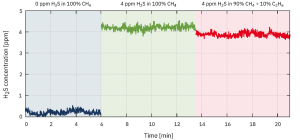
A Multipass cell helps to address both challenges. Folding the beam repeatedly between two spherical mirrors extends the optical path to tens of meters inside a compact housing, and absorbance scales with path length. The improved signal-to-noise ratio also makes the second challenge tractable. With sufficient signal, chemometric methods can be applied to distinguish the H2S line from the overlapping hydrocarbon contributions rather than averaging them. The figure below shows 4 ppm of H2S measured first in pure methane and then in a 90% CH4/10% C2H6 blend. The reading remains consistent despite the change in matrix.


Established alternatives each concede something at this level. Gas chromatography is accurate, but it requires sample preparation and provides results every few minutes rather than continuously. Lead-acetate tape analyzers consume a reagent on a fixed replacement schedule. Electrochemical cells are inexpensive, but they are cross-sensitive and age quickly, so the recalibration interval is short. In contrast, a TDLAS analyzer with a Multipass cell has no consumables or scrubbers. It holds its calibration for years and reports continuously, so excursions are visible as they happen rather than after the fact.


NEO Monitors’ solution

NEO Monitors is recognized as the leader and pioneer in TDLAS technology. With extensive experience in H2S spectroscopy, NEO Monitors optimizes analyzers for precision, reliability, and seamless integration into demanding industrial applications. The design and performance of the LaserGas™ II MP H2S extractive analyzer reflect a strong commitment to advancing H2S measurement technologies.
With excellent detection limits and high dynamic range, LaserGas™ II MP is the ideal choice for measuring H2S in Natural Gas and other applications.


All LaserGas™ products offer:

  • Sensitive and selective
  • Fast response time
  • No drift of zero/span
  • Continuous health check monitoring
  • Low maintenance requirements, no scrubbers
  • High reliability and longevity
    LaserGas™ II MP

Application H2S in Natural Gas and other hydrocarbon mixtures
Typical range 0 – 10, 0 – 20, 0 – 50, 0 – 100 ppm
Detection limit < 1.0 ppm, typical 0.5 ppm
Typical precision 0.2 ppm or 2 %rel
Cell pressure 1.0 – 1.3 barA
Flow rate 2.0 – 8.0 L/min
Response time (T90) 10 s @ 5 L/min
Hazardous-area classification IECEx/ATEX zone 2; CSA Class I Div 2


Installation recommendation

For optimal performance and reliability, it is recommended to install the LaserGas™ II MP H2S analyzer indoors or in a temperature-regulated shelter. The analyzer is equipped with built-in temperature and pressure sensors, such that there is no need to use external probes. The sampling system should include a particulate and oil filter and flow regulator to maintain the necessary flow rate.
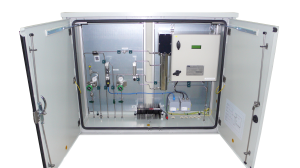


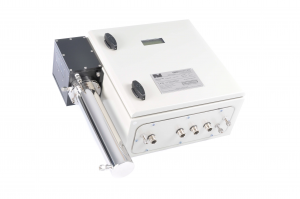
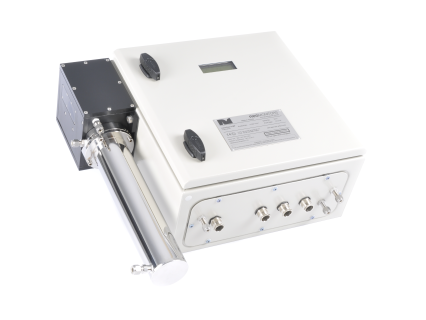
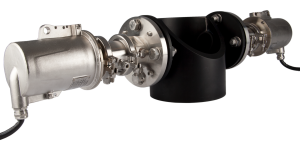
LaserGas™ II MP H2S analyzer implementation for measurements in natural gas, showing the Multipass cell, sample conditioning panel, and electronics housed within a weatherproof enclosure.


Application Note: Measuring H2S in Natural Gas using TDLAS with a Multipass Cell

Download

Deposits of coke inside industrial furnace tubes degrade heat transfer efficiency, increase pressure drop, and necessitate costly shutdowns for decoking. Coke buildup is a common issue across various industries, particularly petrochemical and refining operations, where hydrocarbon streams undergo high-temperature processing. This buildup negatively impacts overall operational efficiency, leading to increased energy consumption, reduced throughput, and potential safety hazards. Real-time monitoring using Tunable Diode Laser Absorption Spectroscopy (TDLAS) enables operators to optimize the decoke process by continuously measuring critical gas species, primarily carbon dioxide (CO2). While monitoring carbon monoxide (CO) can provide additional insights, particularly in detecting incomplete combustion, focusing on CO2 alone typically provides sufficient information for effective decoking. Implementing TDLAS technology allows operators to gain actionable insights, achieve precise control over maintenance cycles, enhance plant safety, and significantly reduce operational costs by minimizing unnecessary downtime and resource consumption.


Application: Furnace Decoking
Furnace decoking is a critical maintenance process involving the controlled combustion or oxidation of accumulated coke deposits within furnace tubes. Coke formation occurs due to thermal cracking of hydrocarbon feedstock under high-temperature conditions, leading to decreased operational performance.

During decoking, steam and air is introduced to burn off these coke deposits. As the coke combusts, it generates measurable concentrations of CO₂ gas, and potentially CO if combustion is incomplete. In-situ monitoring of CO₂ levels with TDLAS provides critical information on the progress and efficiency of the decoking process, enabling precise control of cleaning cycles. Accurate real-time monitoring ensures the process continues only until the coke deposits are thoroughly removed, minimizing downtime and energy usage while extending the operational life of the furnace. Utilizing TDLAS in-situ significantly reduces maintenance needs and increases process uptime by eliminating the complications and delays associated with traditional sampling methods.


Real-time tracking helps identify:
Onset of Decoking: Initial increase in CO2 indicating the start of coke combustion.
Decoking Rate: Rate of increase and peak levels of CO2 to gauge efficiency.
Endpoint Determination: Accurate detection of the endpoint through the return of CO2 concentrations to baseline levels.


This comprehensive monitoring approach enhances both the safety and efficiency of furnace operations.

Process temperature: Typically, 300 – 400 °C *
Process pressure: 975 – 1,015 mbarA *
CO2 concentration: Mid-cycle 9% (Typical range 0 – 25%)
CO concentration (optional): Mid-cycle 1% (Typical range 0 – 10%)
(*) Temperature and Pressure transducer is highly recommended.


NEO Monitors’ solution
NEO Monitors’ LaserGas™ III Ultra analyzers are the benchmark for industrial TDLAS technology. With best-in-class detection limits and an unmatched dynamic range of seven decades, they are the ideal choice for decoking and many other applications. LaserGas™ III CO2 Ultra is recommended for this application. Optionally, it can be used in combination with LaserGas™ III CO Ultra if it is also required to measure CO.


All LaserGas™ products offer:

  • Sensitive and selective
  • Contactless
  • Fast response time
  • No drift of zero/span
  • Low maintenance requirements
  • High reliability and longevity


LaserGas™ III Ultra analyzers use NEO Monitors’ proprietary IROSS™ signal processing algorithm, which eliminates certain cross-sensitivities to other gas components that may be present in the process.


Installation recommendation
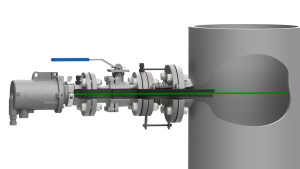
For optimal performance and reliability, it is recommended to install the LaserGas™ III CO2 Ultra analyzer downstream of the furnace tubes, but upstream of separators or scrubbers. Ideally, position the analyzer close to the furnace outlet to ensure accurate gas measurement and prevent interference from condensation or gas-liquid interactions.


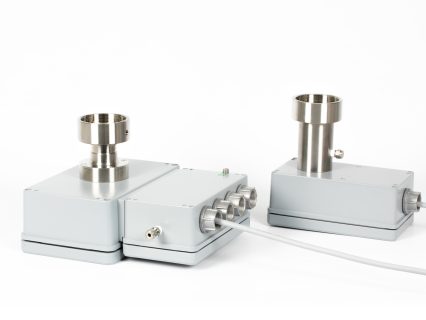
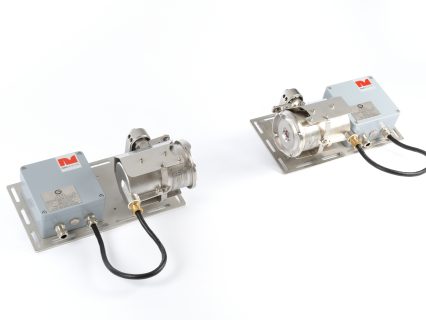
Installation recommendation, LaserGas III Ultra


For further information, see IROSS™ – NEO Monitors’ proprietary signal processing

Application Note: Monitoring Furnace Decoking with TDLAS

Download

Ammonia is vital across industries – from fertilizer production and emissions reduction to its emerging role as a green fuel for energy storage and transportation. As its importance grows, so does the need for advanced measurement technologies to ensure safety, efficiency, and environmental compliance. 

We are proud to present our comprehensive portfolio of products for accurate ammonia monitoring.
Explore how we can support your operations and contribute to a sustainable future. 


NEO Monitors Ammonia Line up 2024 brochure

Download

Deep dive into our cutting-edge IROSS™ signal processing algorithm, which is set to revolutionize the future of TDLAS. This game-changing technology expands possibilities and reduces interference through a source separation algorithm inspired by the music industry. It enables multi-component measurements in real time and allows to combine purposes such as process control and safety, opening up a world of possibilities. Enjoy reading! 

NEO Monitors IROSS™

Download

Hydrogen will become one of, if not the most important energy source in the coming decades. It is also used in industry, for example as a feedstock for chlorine and ammonia production.

NEO Monitors’ laser-based gas measurement technology offers the possibility of performing the concentration measurement without physical contact with the gas.


This combined with the advantages of tunable diode laser absorption spectroscopy (TDLAS), high selectivity and sensitivity, high reliability and low maintenance requirements makes our technology a unique tool for a wide range of applications in many industries, from chemicals and petrochemicals to energy and metals.


NEO Monitors’ can provide gas analyzers for more than 40 gases and combinations. We can measure Hydrogen directly with our in-situ or extractive analyzers; we can also measure impurities like oxygen, carbon monoxide, carbon dioxide or methane in pure Hydrogen in an extractive setup.

NEO Monitors' Hydrogen line up 2024 brochure

Download

We believe that contactless measurements are the future of gas sensing. There are many benefits for customers and the environment. Read more about it in our paper published at the RPW exhibition in Shanghai.


NEO Monitors Contactless measurements the future of gas sensing

Download